



As autumn settles in, the dropping temperatures and shorter daylight hours often prompt a shift in our daily routines. Summer’s bright early mornings and late evening walks give way to crisp air and cozy nights indoors.
If you live with diabetes and are working toward weight management goals, this seasonal shift can sometimes disrupt your physical activity momentum. The thought of intense outdoor cardio in chilly weather or grueling high-impact gym sessions might feel unappealing or intimidating if you experience joint pain.
Here is the good news: You do not need high-intensity, high-impact exercise to achieve steady blood sugar readings and sustainable weight loss. In fact, low-impact workouts are often the most effective, sustainable choice for managing type 2 diabetes and supporting weight management. They place minimal stress on your joints, keep stress hormones like cortisol from spiking, and stimulate your muscles to pull glucose out of your bloodstream efficiently.
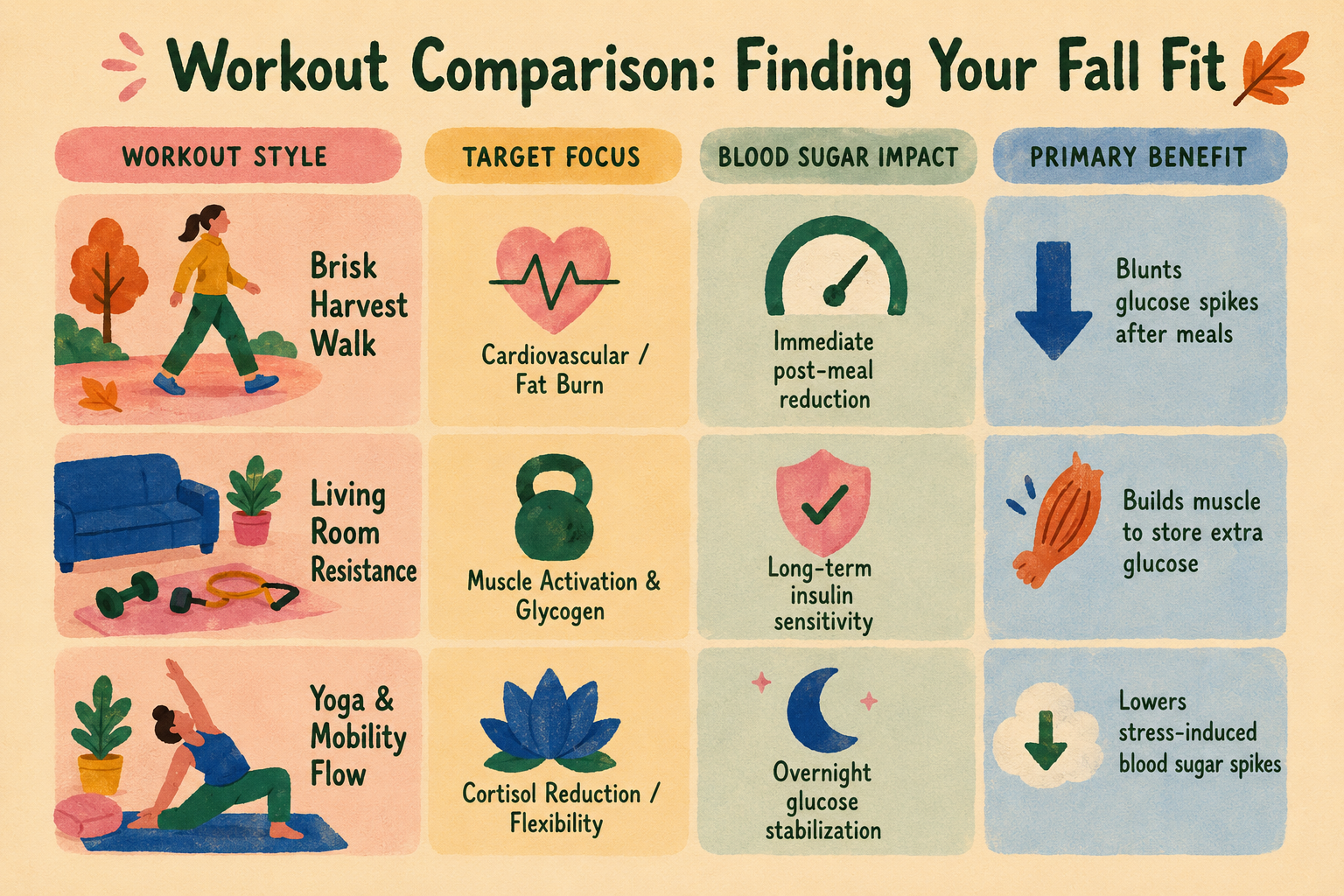
Here is a look at why low-impact movement works so well for diabetes management, along with 3 tailored fall workouts you can start using today.
When you engage in physical activity, your muscle cells contract. This contraction triggers a powerful physiological process that makes muscle cells absorb glucose directly from your blood. Crucially, this muscle-driven glucose pickup happens independently of insulin. Whether your body produces limited insulin or experiences insulin resistance, low-impact exercise bypasses that hurdle, helping to lower blood glucose naturally.
High-intensity workouts can sometimes cause a temporary spike in blood sugar because intense physical stress prompts your adrenal glands to release adrenaline and cortisol, signaling your liver to release stored glucose.
Low-impact movement, on the other hand, keeps heart rates in a comfortable fat-burning zone without triggering a cortisol-driven glucose dump, making post-workout blood sugar levels far more predictable.
Walking remains the single most accessible and impactful low-impact exercise for blood sugar control. The secret to maximizing its weight management and glucose-lowering benefits in the fall lies in timing and pace. Aim for a "brisk" pace where you can comfortably speak in full sentences, but would struggle to sing a song. This intensity corresponds to Zone 2 cardiovascular training, which if you have a tracking device can be monitored.
The Post-Meal Walking Window:
Eat Balanced Meal ➔ Wait 10 to 20 Minutes ➔ Take a 15 Minute Walk
Result: Directly blunts the post-meal glucose peak before it starts!
Strength training is essential for diabetes management and weight loss. The more active muscle tissue you engage, the more storage capacity you have for incoming blood sugar to be immediately used instead of staying in the blood stream. You don't need heavy barbells or complex gym equipment to build functional muscle. A simple set of low-impact bodyweight exercises paired with lightweight resistance bands works exceptionally well and can be done in your warm living room/bedroom.
Perform each exercise for 45 seconds, followed by 15 seconds of rest. Complete the circuit 3 times through:
Stress plays a massive, often overlooked role in both blood sugar levels and weight management. Chronic stress elevates the hormone cortisol, which promotes visceral fat storage (fat around your abdominal organs) and directly increases insulin resistance. Gentle yoga and mobility routines combine low-impact movement with rhythmic, diaphragmatic breathing. This activates your parasympathetic nervous system (the "rest and digest" state), lowering cortisol levels, relaxing blood vessels, and improving insulin responsiveness.
Stress vs. Relaxation Impact on Glucose:
• Chronic Stress & High Cortisol: Increases insulin resistance ➔ Higher blood sugar & fat storage
• Yoga & Breathwork Flow: Activates parasympathetic nervous system ➔ Lowers cortisol & improves glucose control
Try this relaxing flow before bedtime or after a long day at work to unwind and stabilize evening glucose levels:
Before starting or adjusting any exercise routine when living with diabetes, keep these practical safety steps in mind:
