



September brings a noticeable shift in energy. Summer’s unpredictable schedules, vacations, and outdoor gatherings begin to wind down, making room for routines, cooler weather, and a quieter pace.
If you’re living with diabetes and navigating weight management, late summer can sometimes feel like a blurry stretch where health goals quietly may have taken a backseat. It's easy to look at the calendar, realize the holiday season is just around the corner, and feel a wave of pressure or guilt.
Here is the truth: September is not a time for guilt; it is time for a reset button.
Instead of waiting for January 1st to "start over," early autumn gives you a valuable window of time to establish steady habits before the holiday bustle arrives. Re-engaging with your health right now isn't about extreme diets or rigid rules, but rather making practical, sustainable adjustments that work with the changing season.
Here are 3 actionable ways to re-energize your health goals this fall, manage your blood sugar with confidence, and build momentum that carries you through the end of the year.
Summer eating often relies on quick, cold meals like salads, grilled meats, and fresh fruits. As the weather cools, your appetite naturally shifts toward warm, hearty, and comforting foods. The good news? Autumn produce offers some of the most nutrient-dense, fiber-packed ingredients of the entire year.
When managing blood sugar and weight, the goal is to choose foods high in fiber. Fiber helps slow the rate at which carbohydrates are broken down and absorbed, preventing post-meal glucose spikes and keeping satiety hormones high (i.e. keeps you fuller longer).
Instead of fearing fall vegetables because of their carbohydrate content, pair them strategically with lean proteins and healthy fats:
Preparation is the enemy of impulsive eating. When you do have a night to cook, prepare more than one meal’s worth of food.
Having these components ready in the fridge means a balanced, blood-sugar-friendly meal is only a couple minutes away on a busy weeknight.
When the daylight hours shorten and temperatures drop, motivation to exercise can take a hit. If your summer routine relied on early morning or late evening walks, you might find your current schedule no longer fits your daily rhythm.
Rather than abandoning movement altogether, adapt your exercise routine to match the season. Physical activity is one of the most effective tools for weight management and blood sugar control because muscle contraction stimulates the body to pull glucose out of your bloodstream and into your muscles without requiring extra insulin.
Perhaps the most important step in re-energizing your health goals is updating your mindset. Many people treat health management like an all-or-nothing contract: either they are sticking to their routine 100%, or they feel like they have "failed."
However, managing a chronic condition like diabetes alongside weight loss is dynamic. Goals set six months ago may no longer align with your current lifestyle, stress levels, or medical needs.
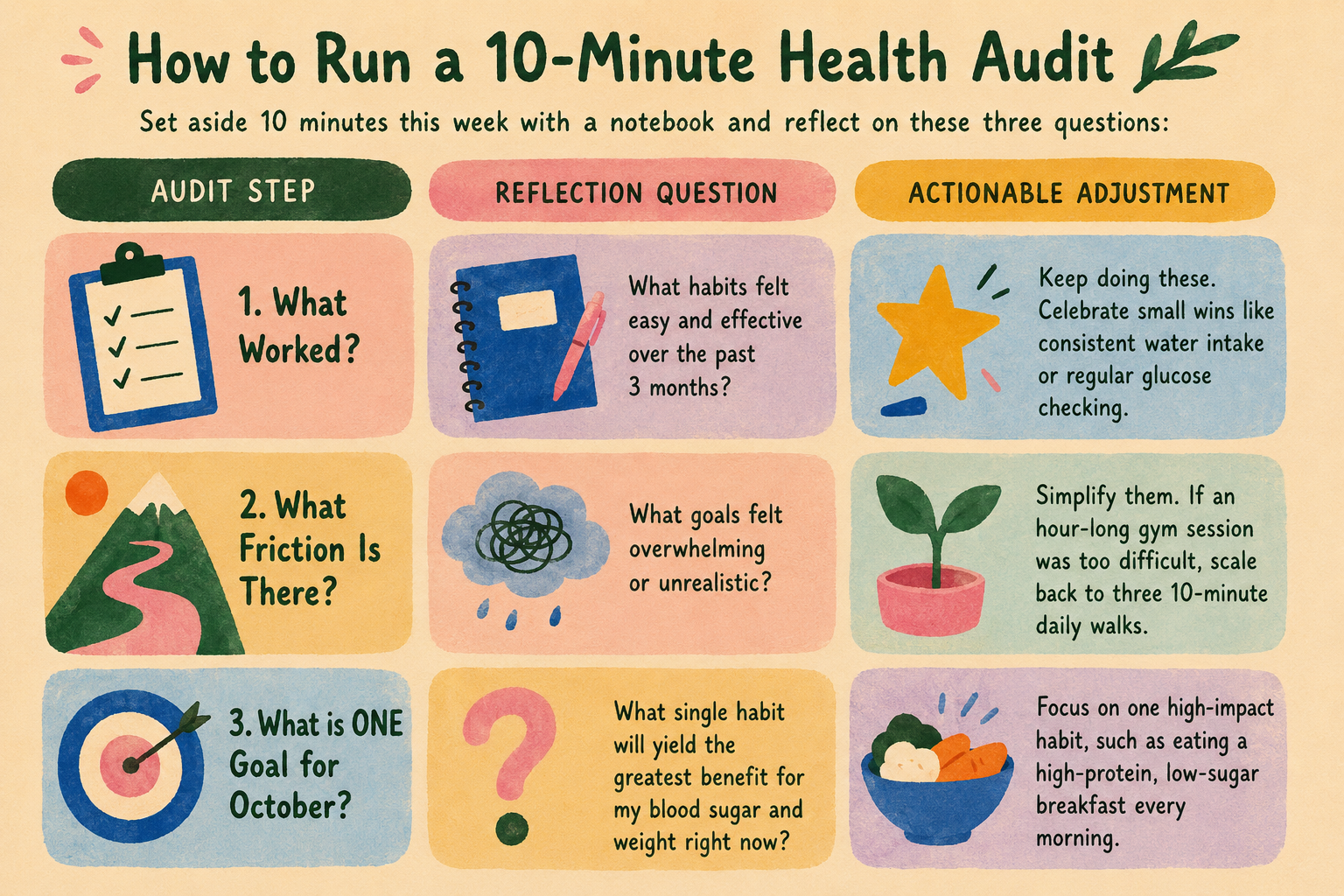
It's common to set "output" goals like "I want to lose 10 pounds by November." While tracking weight is helpful, you don't have direct, minute-by-minute control over the scale.
Instead, focus on input goals to get there. What are the specific actions you control every day:
When you consistently hit your input goals, the output goals (like improved blood sugar readings and steady weight loss) naturally follow.
