



For many people living with diabetes, the question: "What’s for dinner?" is loaded with more than just hunger. It’s a question of blood sugar management, carb counting, and energy levels. When you’re tired at 6:00 PM after a long day, making a healthy choice is hard if you haven’t done some preparation.
That is where meal planning comes in. It isn’t about being "perfect" or spending your entire Sunday in the kitchen. It is about removing the decision-making stress during your busiest moments to reduce the daily mental load that we all carry.
By following these three simple steps, you can create a sustainable routine that keeps your glucose steady and your stress levels low. If you want more information, check out our meal planning workshop recording here:
The biggest mistake people make with meal planning is planning for the life they wish they had, rather than the life they actually have.
Before you look at a single recipe, look at your week. Do you have a late meeting on Tuesday? Does your daughter have soccer practice on Thursday? Is Friday your "I’m too tired to move" night?
The Goal: Match the complexity of the meal to the amount of time you actually have.
We live in a world of endless social media recipes, but you don't need a five-star gourmet menu every night to manage diabetes effectively. In fact, repetition is your best friend and is a key to keeping you on track.
When you eat "repeat meals," you already know exactly how your blood sugar responds to them. There is no guessing, and you already know how to make these meals.
Assigning themes to certain nights reduces the "blank page" syndrome of planning:
If you do have time to cook, never cook just enough for one meal. If you are grilling chicken or boiling quinoa, double the batch and save time the next day.
Meal planning is much easier when you aren't starting from scratch. Sit down with your family and make a master list of the foods/meals everyone actually enjoys.
Once you have your "Master List," look at it through the lens of diabetes-friendly modifications. It is much easier to tweak a favorite meal than to force yourself to eat something brand new. Also, this saves money as you aren’t randomly buying food at the grocery store, but rather you are shopping with purpose and a plan.
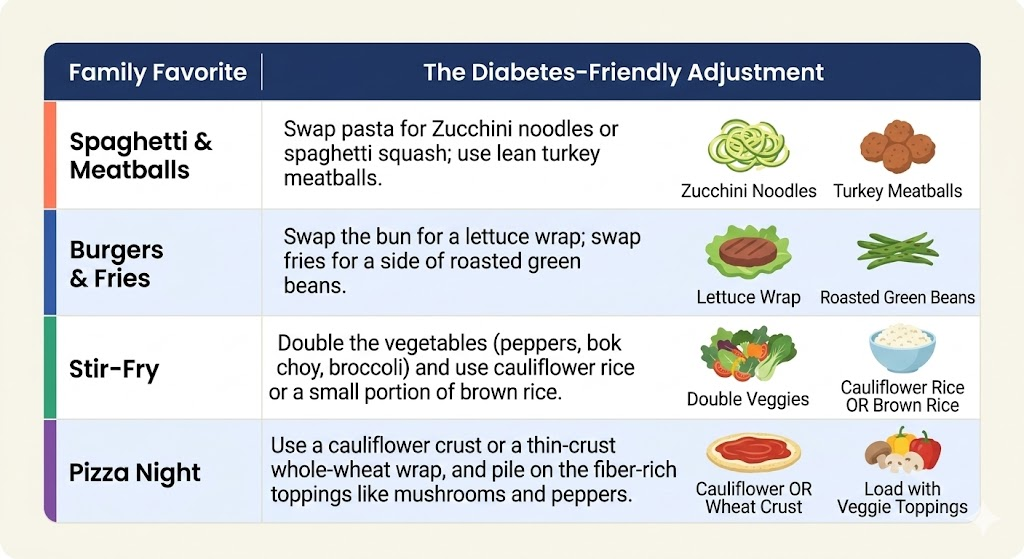
Pro Tip: Keep this list on your fridge or in your phone's "Notes" app. When you’re feeling uninspired during your planning session, just pick three things from the list.
Your blood sugar thrives on consistency, and your brain thrives on simplicity. Meal planning isn't a chore, and it doesn’t have to be overly complicated. Try to reframe it as a gift you give to your "future self" so they don't have to worry when life gets hectic.
