
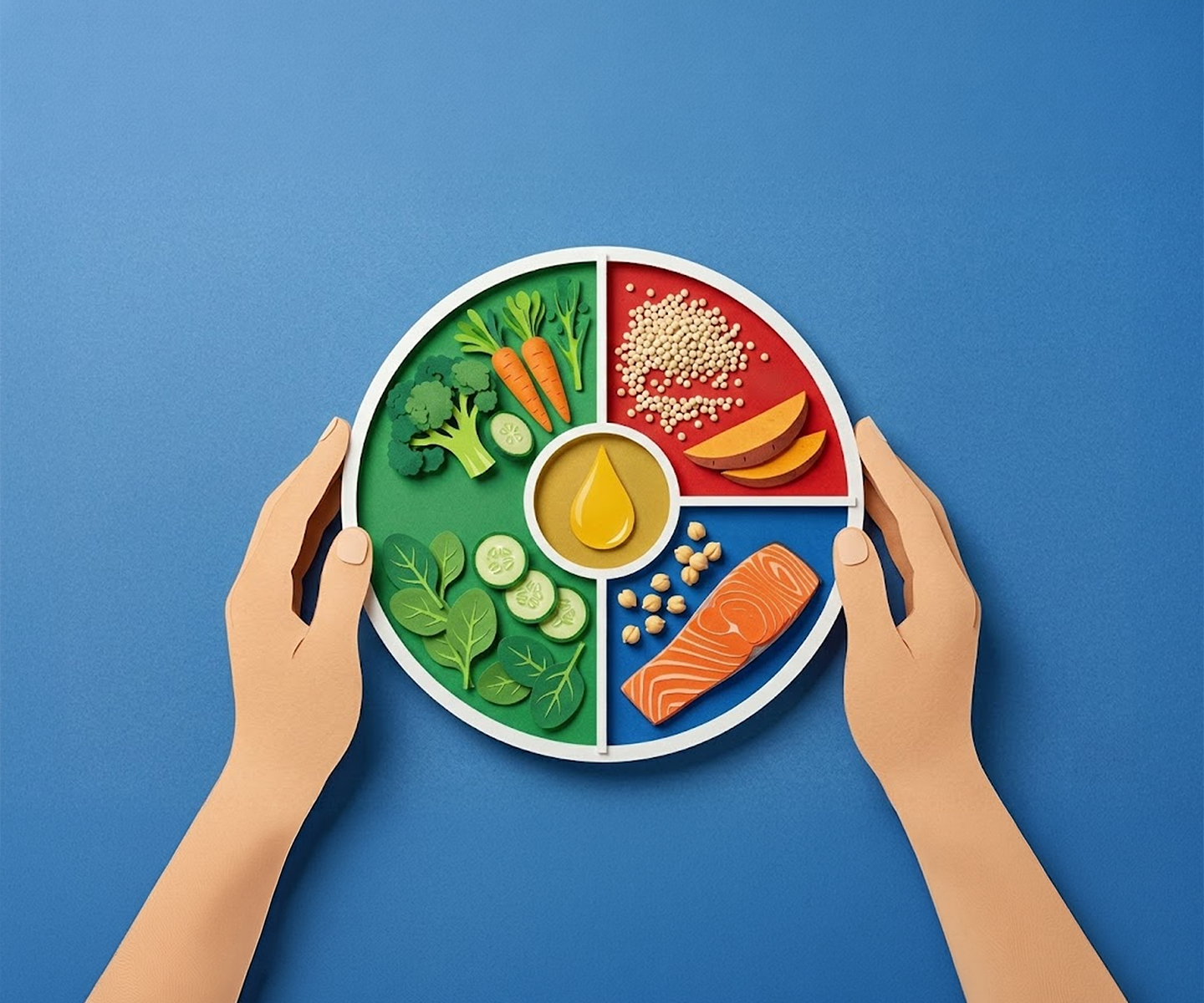


The "Plate Method" is one of the most effective, visual ways to ensure you are getting the nutrients you need while keeping your glucose levels in a healthy range. By structuring your meals around these three essential pillars, you create a natural buffer that slows down sugar absorption (meaning lower blood sugar spikes after meals/snacks) and keeps you full longer.
Let’s break down the three components of a perfectly balanced diabetes-friendly plate.
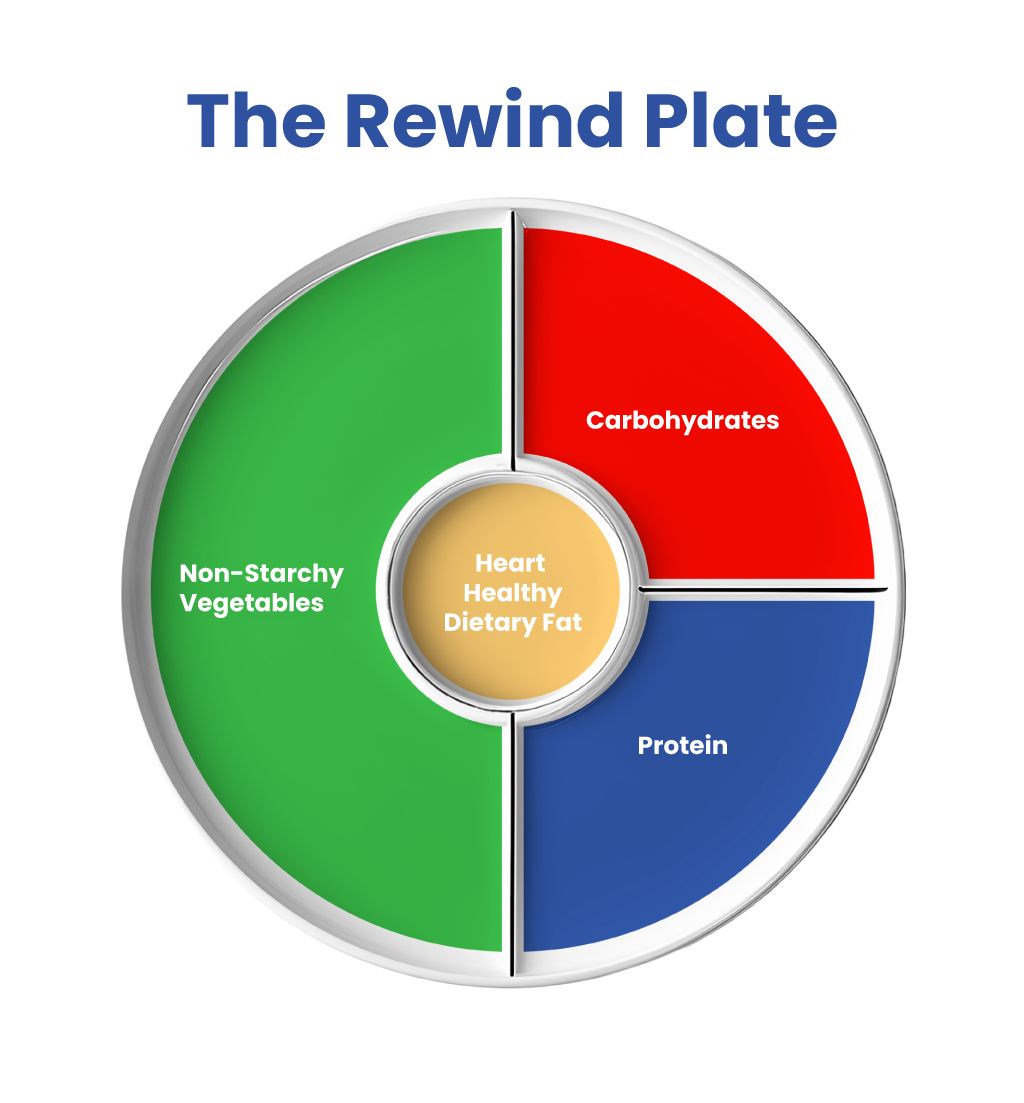
If there is one "secret weapon" in diabetes nutrition, it’s the non-starchy vegetable. Because these foods are low in calories and carbohydrates but high in fiber and water, they allow you to eat a satisfying volume of food without a significant impact on your blood sugar.
Fiber acts like a physical barrier in your digestive tract. It slows down the speed at which your body breaks down carbohydrates into glucose and also helps keep you full. Think of it as a natural barrier that keeps the digestion of foods going at the right speed.
Pro Tip: Aim for color diversity. Different colors represent different nutrients, phytonutrients, and antioxidants, which help combat the inflammation often associated with diabetes.
The remaining half of your plate should be split equally (about 1/4 each) between high-quality protein and complex carbohydrates, eaten in that order as well.
Protein is essential for muscle repair and immune function, but for those with diabetes, its primary role at mealtime is satiety. Protein triggers hormones that tell your brain you’re full and also help mitigate your body’s blood sugar response.
You don’t need to fear carbohydrates. You just need to choose the ones that work for your body. Refined/processed carbs (white bread, white rice, chips, crackers) hit the bloodstream like a rocket and have the greatest spike after a meal. Fiber-containing carbs act more like a slow-burning candle.
The Golden Rule: Never let a carb be “naked.” By pairing your carbohydrate with a lean protein or healthy fat, you significantly flatten the post-meal glucose spike.
Fat has long been misunderstood, but it is a critical component of blood sugar stability. While fats don't contain carbohydrates, they are the slowest-digesting macronutrient of all. Adding a small, controlled amount of healthy fat to your meal further delays gastric emptying, ensuring a slow, steady release of energy.
Portion sizes matter, and fats, even healthy fats, are calorie-dense. A single tablespoon provides flavor and moisture that makes a meal feel more gourmet and complete, without overdoing the caloric load, which aids in your weight loss journey.
To see how these three considerations look in real life, here is a simple "Power of the Plate" daily menu:
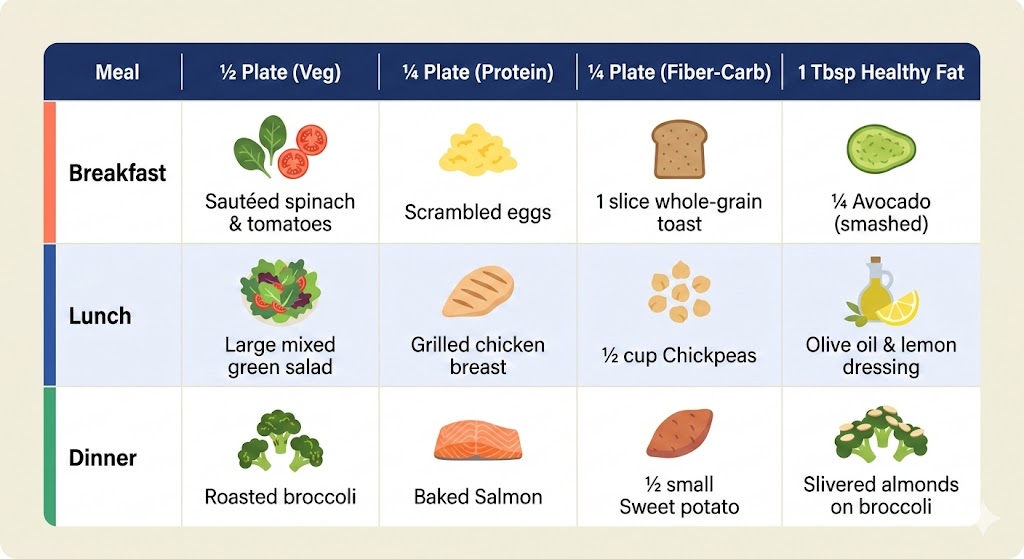
By following the Plate Method outlined here, you take the guesswork out of mealtime. You aren't just eating to "control" a disease; you are fueling your body for longevity and energy.
