Realistic, Not Restrictive: 3 Compassionate Approaches to Holiday Diabetes Care
Health
10 min
Jenna Ehteshami, MS, MPH, RD, LD
The holidays are a season of joy, connection, and celebration…but for people living with diabetes, this time can also bring additional pressure. There’s pressure to eat a certain way, pressure to stay perfectly “on track,” and pressure to navigate comments from well-meaning friends and family.
But here’s the truth: you don’t need a rigid plan to care for yourself during the holidays. What you need is a realistic, compassionate approach that honors both your health and your humanity.
Here are three gentle strategies to help you feel supported, not restricted, as you move through the season.
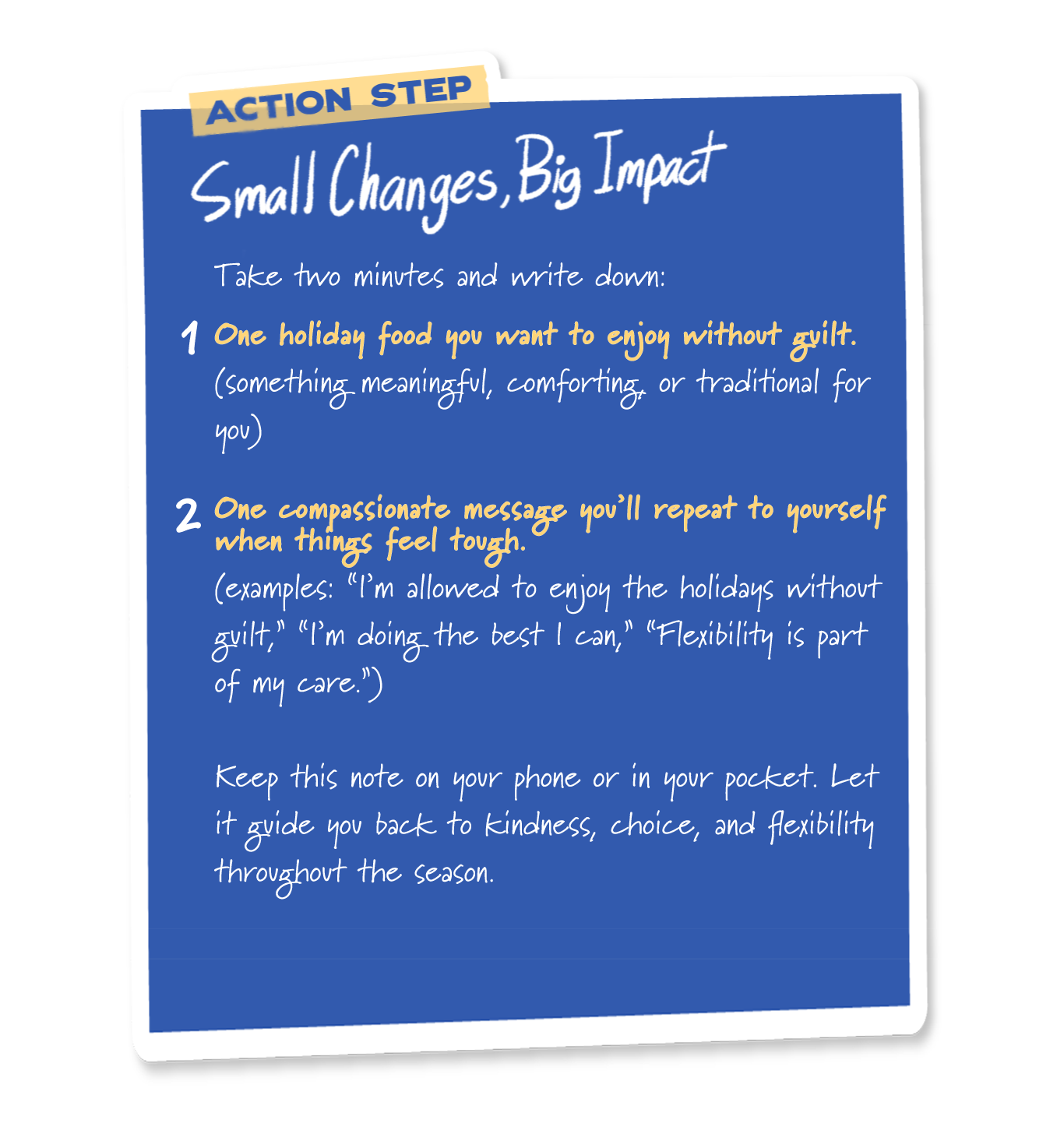
1. Give Yourself Permission to Enjoy Holiday Foods
You don’t have to avoid all the traditional foods you love. In fact, trying to restrict yourself too much often leads to more stress and sometimes even bigger blood sugar swings.
Try this compassionate approach:
• Choose your meaningful foods. Pick the dishes that are special and truly bring you joy. Then savor them mindfully - think about how they look, how they smell, and how they taste with each bite.
• Balance your plate, not your worth. Pair richer foods with protein or non-starchy vegetables to support steadier glucose using the diabetes plate method (½ plate non-starchy veggies, ¼ plate lean protein, and ¼ plate richer/higher carb foods). Try eating the foods in that order as well.
• Avoid “all-or-nothing thinking.” One meal doesn’t define your health journey and food guilt doesn’t help you. Zoom out and focus on your overall progress on this health journey rather than focusing on one meal or snack or day.
Food is more than fuel during the holidays: it’s connection, culture, and comfort. You deserve to enjoy that without feeling guilt!
2. Make Space for Flexibility Instead of Perfection
Holidays often come with unpredictable schedules. Meals may happen later than planned, gatherings may run long, and travel + delays may interrupt your routine.
The goal is not to maintain perfect blood sugars as we’ve been talking about a lot this month. The goal is to support yourself through the fluctuations that are inevitable.
Ways to stay flexible:
• Check blood sugars with curiosity, not judgment. Use the information as a guide, not a critique.
• Move when and how you can. A short walk after eating or gentle stretching before bed can make a difference. It may look different than your at-home routine that you’re used to, and that’s ok. All movement counts, even if it’s not structured exercise.
• Rest is part of management. Prioritize sleep or take a short nap if the season is tiring. Rest is healthy for your body and your mind.
Flexibility is not “giving up” on your health goals. It’s realistic, sustainable care.
3. Lead With Self-Kindness, Especially When Things Feel Hard
Stress, emotions, and social dynamics can take a toll this time of year. Being compassionate with yourself is just as important as any nutritional strategy.
Supportive mindset shifts:
• Use kind self-talk. Try “I’m doing the best I can” instead of “I should have done better.”
• Set gentle boundaries. It’s okay to step away, say no, or make decisions based on your needs.
• Reach out to someone you trust. Connection is powerful support for both emotional and physical health.
• Expect ups and downs. Blood sugars may fluctuate more during the holidays and that doesn’t mean you’re failing. Your blood sugar levels do not mean you are a “good” or “bad” human. They are just numbers that you can use as data points along your health journey.
Your well-being is not measured by numbers alone. Compassion is part of your care plan.